
Thesis: “How Economic Sanctions Are Redrawing the Economic and Geopolitical Landscape: The Case of Russia”
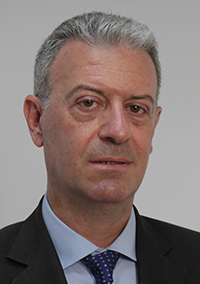
Mr. Arturo Caione is an Italian policy adviser whose work spans parliamentary affairs, European policy and strategic communications. Over the course of his career, he has developed extensive experience in analysing political and economic dynamics and translating complex policy issues into clear and actionable insights supporting informed decision-making.
He has advised on legislative strategy across industry, finance and EU affairs, contributing to policy discussions and public debate through the preparation of briefings, speeches and communication materials, while supporting strategic positioning in complex policy environments. Earlier in his career, he developed a strong analytical and editorial foundation through his work in financial journalism, contributing to economic analysis and corporate reporting: an experience that continues to inform his evidence-based approach to policy and communication.
He currently serves as Senior Adviser for Policy and Strategic Communications, where he works on initiatives at the intersection of business, sustainability and public policy. In this role, he designs and oversees multidisciplinary projects that bring together business leaders and institutions, ensuring effective coordination, policy alignment and successful delivery. He is also co-author of a book on the stories of company founders, highlighting his interest in business narratives and leadership.
He earned his Bachelor’s degree in Business Management from Bocconi University and further specialised through postgraduate studies, including a focus on the internationalisation of businesses and EU interdisciplinary analysis. This trajectory was most recently complemented by an Executive Master in International Politics at the CERIS Diplomatic School of Brussels, consolidating his focus on European governance and geopolitical dynamics.
This thesis examines the transformative role of economic sanctions in reshaping global power dynamics, with a focus on the Russian Federation following its 2022 invasion of Ukraine. Moving beyond conventional assessments of sanctions as coercive tools, the study explores their systemic, normative, and performative dimensions — arguing that sanctions function not only as instruments of pressure but as strategic devices embedded in broader geopolitical logics.
Through a multi-level impact framework, the research analyzes Russia’s economic adaptation, financial de-dollarization, and geopolitical realignment toward China and the Global South. It highlights how sanctions have triggered a silent transformation: fragmenting trade flows, deepening currency dependencies, and accelerating the erosion of Euro-Russian interdependence. Simultaneously, the thesis assesses the return costs for sender countries, particularly the European Union, whose normative ambitions are constrained by institutional fragility and strategic ambiguity.
The study also interrogates the evolving posture of the United States, where sanctions shift from normative enforcement to transactional leverage, and considers the implications of a multipolar order in which sanctions may reinforce polarization rather than convergence. A scenario taxonomy outlines ten possible trajectories for the Russia–Ukraine conflict, each with distinct consequences for the future of sanctions.
Ultimately, the thesis argues that sanctions are no longer technical measures but practices of power—capable of redefining strategic space, shaping alliances, and signaling intent. Their effectiveness lies not in immediate outcomes but in their capacity to condition long-term behaviour and reconfigure the architecture of global order.