


Broadcast of the film by Adela Peeva “Whose is this song?” (Adela Peeva, Bulgaria 2003, 70 min). Following this screening, we will organise a debate chaired by Jacques Rupnik (SciencesPo Paris, IEP-Paris) on identity, culture and nationalism on Saturday March 14th, 2026 from 2 p.m. to 5:00 p.m.
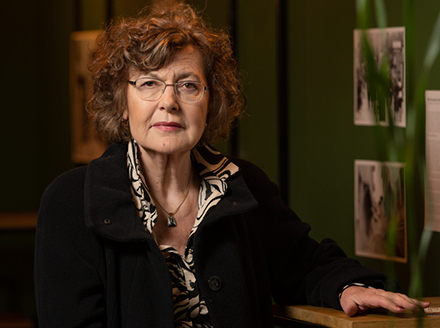 Adela Peeva learned the art of filmmaking at the Academy for Film, Theatre and TV in Belgrade. In the early 1970s she directed TV programs in Yugoslavia, and then moved on to make over 40 documentaries at the Studio for Documentary Films in Sofia, Bulgaria. Despite earning international awards, some of the films she made (Mothers, In the Name of the Sport) were banned during the Communist period. In 1988, she began making feature films at the Studio “Boyana” in Sofia and then left in 1991 to found her own production company. A very active member of the European film community, she serves on the board of the European Documentary Network (till 2004), belongs to the European Film Academy, the Union of Bulgarian Filmmakers, the Association of Bulgarian Producers and was a member of the Jury at the Cannes (the Ecumenical Jury), Kalamata, Berlin and Mumbai Film Festivals. In her search for the true origins of a haunting melody, Bulgarian filmmaker Adela Peeva travels to Turkey, Greece, Macedonia, Albania, Bosnia, Serbia and Bulgaria. The trip is filled with humor, suspense, tragedy, and surprise as each country’s citizens passionately claim the song to be their own and can even furnish elaborate histories for its origins.
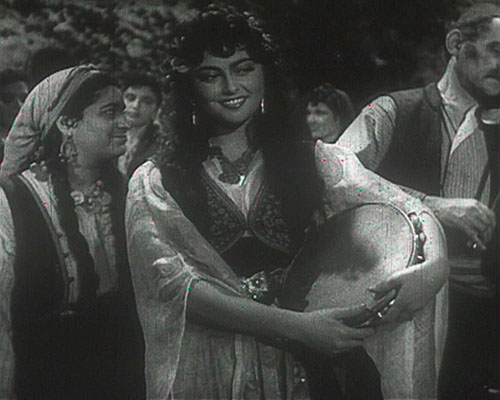
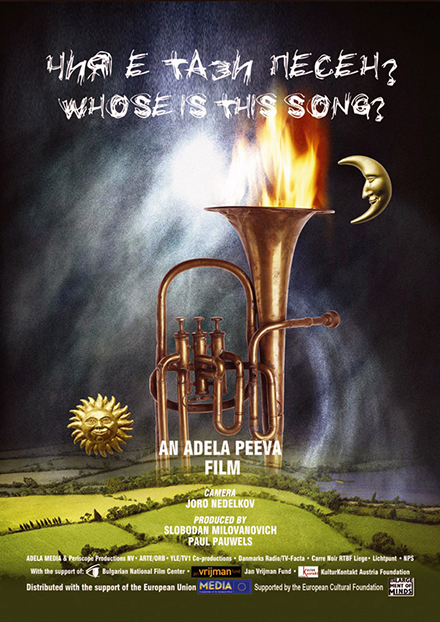 The film “Whose is this song?” makes remarkable use of a simple device to higHight subtle truths. A Turkish song in an Istanbul cafe is claimed by every friend at the dinner table – Greek, Macedonian, Turk and Serb – as belonging to his or her nation. But Peeva knows it is Bulgarian. Was it not part of her childhood? The ensuing argument motivates Peeva to undertake a journey through all those nations in search of the song’s origins. She stumbles upon conflicting accounts. Some say it came from the Crusades, others insist that it is about Patsa who lived in a neighbouring village 40 years ago, still others declare that it was the sensuous song of Koshnaka, a gypsy dancer. As she wanders through the Balkan nations, Peeva comes across many old men and women who remember the past. Pointing to a faded film poster, a man says that the song had been sung by Zeki, a famous star of the 1960s. But now the actor and the film crew are no more, even the buildings in the picture are gone. “I am here, the sea is here, all the rest is memory.” The hunt leads to Albania and to a conductor who introduces her to his orchestra. Theresa the singer knows the song well. Recalling their sufferings in the wars she says, “We transforme our pain to strength, not depression“. In Bosnia she is told that the song is Bosnian; it brings the east and the west together, cherished by Muslim, Greek Orthodox and Catholic alike. The plump singer with a traditional scarf scorns the notion of the song being Serbian. She sings only authentic traditional songs and of course this is one of them, a love song that says, “I will wash you in dew, cover you in silk, and if I were a bird I would fly all over Bosnia.” That is the beloved motherland of people who “trust in God’s justice and pride in the Bosnian nation“. In neighbouring nations the song becomes a lover’s idyll, a mother’s song, a call to muster jehad troops, a hymn to the almighty, a Dervish chant, and a gypsy strain. In the process a priest condemns the gypsification of his nation, and nationalists denounce the theft of their property – the song – by evil neighbours. The camera is casual, but records the inscapes of the subjects speaking of their neighbours with rage, bitterness, jealousy and repulsion. More indirectly, we witness that these are macho cultures trapped in a rigid patriarchy. You can see how much of the film has been unplanned; it has “allowed itself to happen”. This makes it rare and unpredictable, capturing on-the-spot happenings as only nimble minds and cameras can. Twice the filmmaker is in danger of being assaulted, first in a Serbian pub where she realises that she has made a grave mistake in suggesting a Bosnian correction. When she takes the same risk at an outdoor national day celebration in Bulgaria, the picnic turns sour. The men get menacing. Skinheads leaning on mo’bikes announce that Turks and gypsies deserve to be killed. Scenes from her film “Whose is this song?“
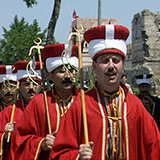
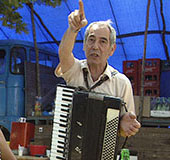
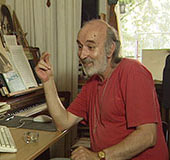
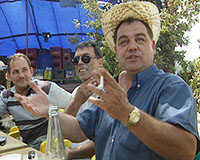
And an old man bellows that anyone who says the song belongs to Turkey is to be strung up on the tree before them and left to rot. The feast ends with a meadow ablaze and fireworks in the sky. It is no use for the filmmaker to say that songs and languages should unite, not divide people. She has witnessed and recorded a simple folk song blazing a long trail of vengefulness. Her experience is so engrossing that viewers forget the humdrum visuals, lacklustre craft skills and limp style. The poor projection at MIFF killed whatever colour contrasts the film may have had. Peeva herself is nondescript on the screen. But there are moments when you know there is a design to it all, whether in a sudden change of expression on an interviewee’s face, the rapture in melodising a note, in the choice of a word – or when a huge nest of beaky waterfowl on the roof of a village house cuts into the field of vision. From the unmistakably local, the film becomes terrifyingly universal. And the Indian in me wonders, is not the tune like an old Bollywood song?