
Artificial Intelligence (A.I.), A.I. for Cyber-Physical Systems, interdisciplinary aspects of A.I., A.I. integration with Digital Twins and Cybersecurity
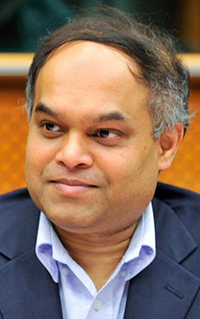
Professor Ajit Jaokar is a dedicated leader and teacher in Artificial Intelligence (A.I.), with a strong background in A.I. for Cyber-Physical Systems, research, entrepreneurship, and academia. Currently, he serves as the Course Director for several A.I. programs at the University of Oxford and is a Visiting Fellow in Engineering Sciences at the University of Oxford. His work is rooted in the interdisciplinary aspects of A.I., such as A.I. integration with Digital Twins and Cybersecurity. His courses have also been delivered at prestigious institutions, including the London School of Economics (LSE), Universidad Politécnica de Madrid (UPM), and as part of The Future Society at the Harvard Kennedy School of Government. As an Advisory A.I. Engineer, Ajit specialises in developing innovative, early-stage A.I. prototypes for complex applications. His work focuses on leveraging interdisciplinary approaches to solve real-world challenges using A.I. technologies. Professor Ajit Jaokar has shared his expertise on technology and A.I. with several high-profile platforms, including the World Economic Forum, Capitol Hill/White House, and the European Parliament. Ajit is currently writing a book aimed at teaching A.I. through mathematical foundations at the high school level. Ajit resides in London, UK, and holds British citizenship. He is actively engaged in advancing A.I. education and innovation both locally and globally. He is neurodiverse – being on the high functioning autism spectrum.
Ajit’s work in teaching, consulting, and entrepreneurship is grounded in methodologies and frameworks he developed through his A.I. teaching experience. These methodologies help to rapidly develop complex, interdisciplinary A.I. solutions in a relatively short time. These include:
1. The Jigsaw Methodology for low-code data science to non-developers.
2. The A.I. Product Manager framework and A.I. product market fit framework
3. Software engineering with the LLM stack
4. Agentic RAG for cyber-physical systems.
5. A.I. for Engineering sciences:
6. The ability of A.I. to reason using large language models
He also consults at senior advisory levels to companies.