
Thesis: “The Impact of Multi-Ethnicity on Aid Effectiveness: A Case Study of An Infrastructure Project in Nigeria“
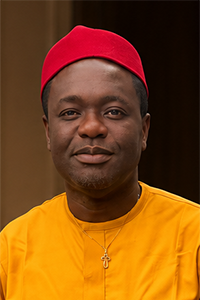
Born in Cameroon and based in Leuven, Belgium, Mr. Chinedu Blaise Nze is an academic researcher and development strategist whose work bridges education, technology, and governance. He holds a Master’s degree from KU Leuven’s Faculty of Educational Sciences and Psychology, where he completed a dissertation on students’ perceptions of Generative AI in academic writing. He also earned an Executive Master’s in Governance and Development Policy from CERIS–ULB Diplomatic School of Brussels, strengthening his expertise in global governance and policy analysis. Chinedu is a member of the Chartered Institute of Development Studies and Administration (CIDSAN), Nigeria, and holds professional certificates in AI Governance and Salesforce Administration, reflecting his commitment to ethical technology adoption and digital systems strengthening.
He is the founder of an educational consultancy that supports students, researchers, and civil society organisations in academic writing, international study applications, programme design, and donor engagement strategy. His work integrates analytical rigor with practical capacity building, enabling organisations to strengthen internal systems, communicate impact, and secure sustainable partnerships. With experience spanning academic research, NGO training design, and AI focused consultancy, Chinedu brings a multidimensional perspective to contemporary challenges in education, governance, and development.
This study investigates the intersection of Nigeria’s multi-ethnic landscape and the implementation of foreign aid, using the Kaduna–Abuja railway project as a focal case. The railway has notably enhanced regional mobility by providing a safer and more efficient alternative to the heavily trafficked Abuja–Kaduna highway, which had gained notoriety for kidnappings and armed violence (Alqali, 2018). Through this lens, the research explores how ethnic diversity and regional dynamics shape both the planning and public perception of aid-supported infrastructure initiatives.
Drawing on policy document reviews and qualitative interviews with government officials, community leaders, and development practitioners, the findings reveal that while foreign aid is formally presented as a neutral instrument for national progress, its execution often reflects ethno-political interests. Respondents across multiple regions highlighted concerns that infrastructure siting and implementation tend to favour territories aligned with the ruling elite—particularly in the North—thus perpetuating perceptions of exclusion and marginalization among Southern communities.
The study also reveals that political transitions, weak institutional safeguards, and ambiguous policy frameworks significantly hinder the continuity and inclusiveness of aid-funded projects. The temporary suspension of the Kaduna–Abuja railway following the 2015 general elections underscores the vulnerability of infrastructural development to political turnover. Many Nigerians express scepticism about the neutrality of foreign aid, believing it to be complicit in reinforcing existing regional inequalities. This research contributes to the broader aid effectiveness discourse by showing how ethnic fragmentation, when coupled with financial mismanagement and limited stakeholder engagement, can erode the developmental impact of foreign assistance. It concludes with a call for institutional reforms that prioritize equity, transparency, and national cohesion in the deployment of aid-funded infrastructure.