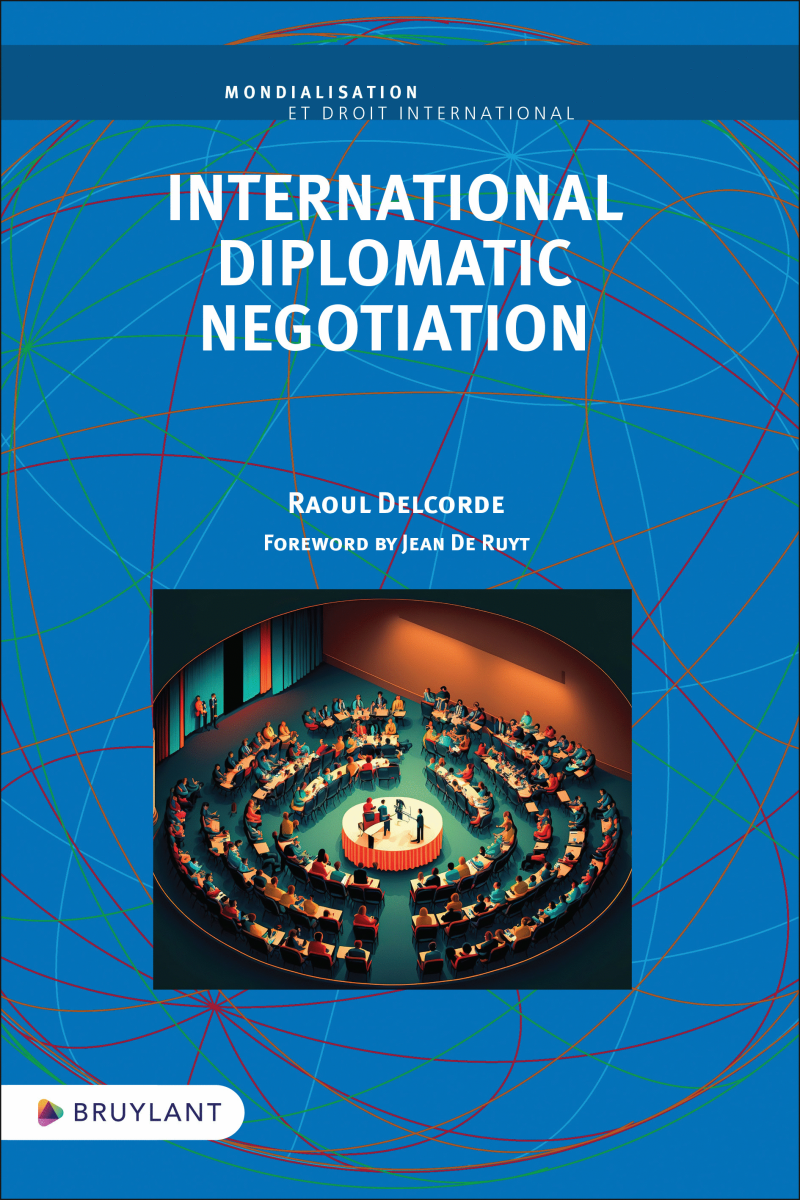
International diplomatic negotiation, Raoul Delcorde, Bruylant, Jan 2025

Link : International diplomatic negotiation, Raoul Delcorde, Bruylant, Jan 2025

Conceptual analyses confronted with empirical verification of diplomatic negotiation Negotiation manages a balance of power between states and governments with divergent aims. Let’s enter the diplomatic arena and see if we can use concrete examples to illustrate the various aspects of a diplomatic negotiation. We can draw on conceptual analyses and confront them with empirical verification. Table of contents (PDF)

About the Author(s)

Author

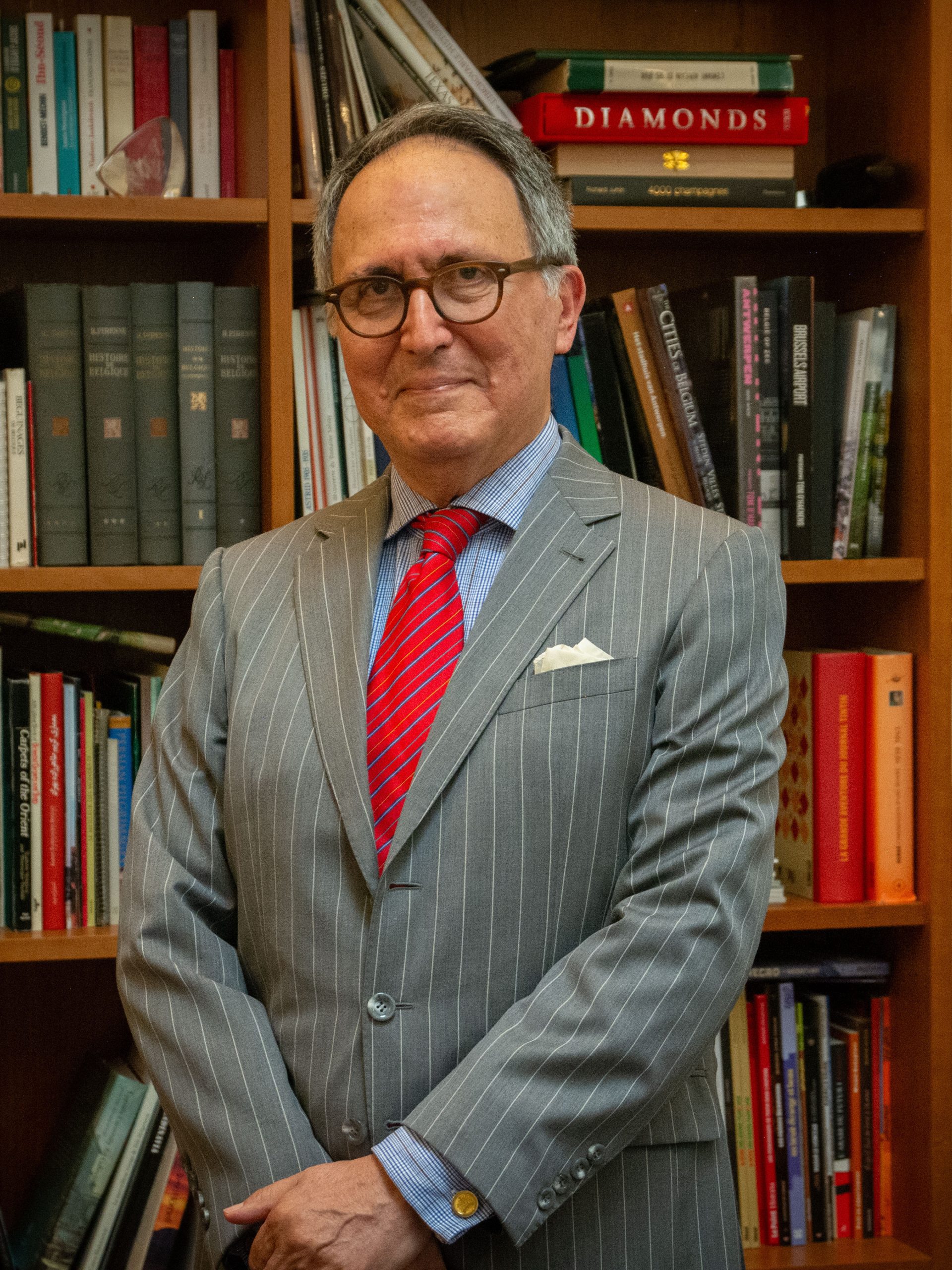
  • Raoul Delcorde : Ambassador (hon.) of Belgium, he holds a Ph.D in political science, he is a visiting professor at the Catholic University of Louvain (Louvain-la-Neuve) and he is a member of the Royal Academy of Belgium.


Preface by

  • Jean De Ruyt : Belgian Ambassador, Member of the Royal Academy of Belgium. Foreword by Jean De Ruyt (PDF)
Description

International negotiation is the pinnacle of diplomacy. It can be approached from a number of different angles. Only a few books on diplomatic negotiation have been written by practitioners, i.e. diplomats. What is the specificity of the practitioner’s approach compared with that of the theoretician? To find out, we need to understand what happens when the doors close behind diplomats. Diplomatic negotiation is a skill, not an exact science. In this book, based on empirical knowledge, we propose an approach in four main parts: 1) a descriptive part explaining how a negotiation evolves; 2) a part analyzing the mechanics of negotiation; 3) a part focusing on the internal and external elements that influence negotiation and 4) a final part on what happens once the negotiation is over. The focus here is on multilateral negotiations, both taking place within an international organization and involving several states. However, the evaluations presented can also be applied to bilateral negotiations. Relevant instances are drawn from diplomatic negotiations as reported by the negotiators who took part in them. The book concludes with a series of practical suggestions to make the most of a negotiation and bring it to a successful conclusion.
Table of contents

Acknowledgments
Preface
About the author

I – Introduction
II – Negotiation: the theoretical framework
III – Preliminary negotiations
IV – Defining the framework of the negotiation
V – The dynamics of negotiation
VI – From diplomatic conferences to multilateral organizations
VII – Summit diplomacy
VIII – Mediation diplomacy
IX – Paradiplomacy and negotiation
X – With whom to negotiate?
XI – Informal negotiations
XII – Are there ethics of international negotiations’ ethics?
XIII – Conclusion

Bibliography
Appendices
Appendix I – Three special days in gogol’s country
Index

Technical info
 
 
Type of product book
Format Paperback
EAN / ISSN 9782802776031
Series name Mondialisation et droit international
Weight 295 g
Status Available
Number of pages 184 p.
Access to exercice No
Publisher Larcier
Language English
Publication Date Jan 27, 2025
Available on Strada Belgique Yes
Available on Strada Europe Yes
Available on Strada Luxembourg Yes
 
Digital version available on :
  • Strada lex Belgium
  • Strada lex Luxemburg
  • Strada lex Europa
About the author

Raoul Delcorde is a Belgian diplomat, academic, and author. He served in the Belgian diplomatic service, holding ambassadorial posts in Sweden, Poland, and Canada, and senior positions within the Ministry of Foreign Affairs. Raoul Delcorde joined the Belgian diplomatic service. His early assignments included Deputy Head of Mission in Islamabad, First Secretary at the Belgian Mission to the United Nations in New York, and First Secretary at the Belgian Mission to the Organization for Security and Cooperation in Europe in Vienna. He later served as Minister-Counsellor at the Belgian Embassy in Washington, D.C. He was appointed Ambassador of Belgium to Sweden (2003–2007), Ambassador of Belgium to Poland (2010–2014), and Ambassador of Belgium to Canada (2014–2018). Within the Ministry of Foreign Affairs in Brussels, he served as deputy director for European Affairs, Deputy Director General for Multilateral Affairs, and Director for the Middle East and North Africa. Raoul Delcorde has also taught as a Guest Professor at the School of political science of the Université catholique de Louvain. He has been also a Guest Professor in international relations at the University of Montréal and at Georgetown University (Washington). He was elected President of the Club Diplomatique de Belgique. He is a member of the Académie Royale de Belgique and of the Académie des sciences d’outre-mer in France. He has published works on diplomacy, international relations, and Belgian foreign service, and is active in academic and diplomatic circles in Belgium and abroad. Here are some of his selected publications : La sécurité et la stratégie dans le golfe arabo-persique (1983); Le jeu des grandes puissances dans l’Océan Indien (1993); Les diplomates belges (2010); Le métier de diplomate (2018); Diplomatie et politique étrangère à l’heure de la mondialisation (2020); La carrière diplomatique en Belgique (2022); Manuel de la négociation diplomatique internationale (2023); International diplomatic negotiation (2025); Manuel de droit diplomatique (2026); Dictionnaire de la diplomatie contemporaine (2026). [read more]