Link: The death of the ‘global cop’: why NATO’s Ankara summit is burying out-of-area operations by Nicholas Williams (Vice President of CERIS), European Leadership Network, 30/06/2026
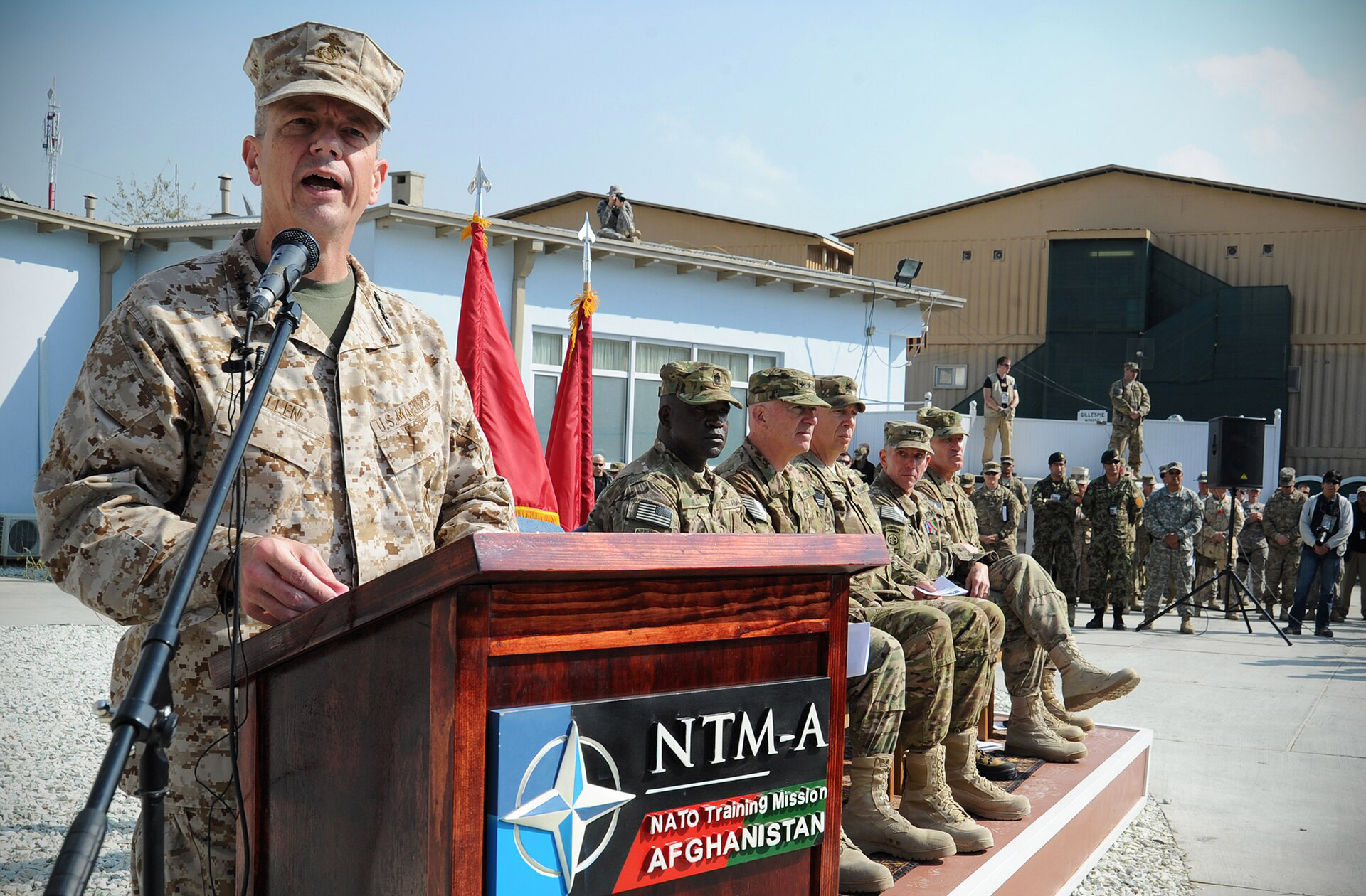


Link: The death of the ‘global cop’: why NATO’s Ankara summit is burying out-of-area operations by Nicholas Williams (Vice President of CERIS), European Leadership Network, 30/06/2026

> Nicholas Williams, OBE is a Senior Associate Fellow for the European Leadership Network (ELN). He was a long-serving member of NATO’s International Staff, most recently as Head of Operations for Afghanistan and Iraq. Prior to this, Nick served in senior positions in NATO, EU, and British missions in Afghanistan, Bosnia Herzegovina, and Iraq. He began his career in the British Ministry of Defence working on defence policy and planning issues, with multiple secondments to NATO functions during the Cold War and to the French Ministry of Defence in its aftermath. Mr. Nicholas Williams is the Vice President of CERIS-ULB Diplomatic School of Brussels since 2021.
This commentary is part of the European Leadership Network’s special coverage of the 2026 NATO Summit, which will take place in Ankara on 7-8 July 2026. The series brings together expert voices to examine the key security challenges, strategic questions, and policy debates shaping the future of the alliance before and after the summit.
According to NATO’s Strategic Concept, the alliance has three core tasks: deterrence and defence, crisis prevention and management, and cooperative security. The second task was the reason why NATO, with the authority of United Nations Security Council resolutions, launched operations in Afghanistan in 2003 and Libya in 2011.
Indeed, from its first involvement in Bosnia in 1992, launching a maritime monitoring mission in the Adriatic Sea against the former Yugoslavia, to the ignominious and chaotic withdrawal from Afghanistan in 2021, NATO was mostly preoccupied with operations beyond its traditional geographic borders. During that 30-plus-year period, NATO dismantled its defence plans and linear military disposition against Russia. According to many analysts, NATO would have been incapable of fulfilling its Article 5 collective defence obligations had Moscow chosen to move against the Baltic states rather than become embroiled in Ukraine.
Although they attract little attention, NATO still maintains several missions – or “out-of-area operations” as they would have been considered in the Cold War – which are not linked directly to NATO’s Article 5 collective defence obligations. These heavily prioritise the Balkans, European maritime security, and targeted security assistance. They are also far more limited in scope than the alliance’s large-scale interventions in Afghanistan or Libya.
The most significant of these is the Kosovo Force (KFOR), NATO’s largest remaining peace-support mission, with around 4,700 troops from 31 contributing nations deployed since 1999. Elsewhere, NATO’s presence is much smaller and focused on specialist tasks, including the NATO Mission Iraq, a non-combat advisory mission launched in 2018 to strengthen Iraqi security institutions, and Operation Sea Guardian, which provides maritime security, counter-terrorism, and situational awareness in the Mediterranean.
The alliance also maintains contingency forces that can deploy at short notice to reinforce NATO’s presence in Kosovo or the European Union’s peacekeeping mission in Bosnia, should tensions escalate in the Western Balkans. Taken together, these operations reveal a much narrower operational focus than in previous decades, concentrating on regional stability in Europe’s neighbourhood rather than the expeditionary crisis-management missions that once defined NATO’s post-Cold War role.
Yet, despite the resources allocated to these missions, they will receive little to no attention at the upcoming NATO summit in Ankara. The reason for this goes to the heart of President Trump’s vision for a Europeanised NATO – an alliance focused exclusively on deterrence and defence against Russia, leaving crisis-management and stabilisation missions behind. For the Trump administration, out-of-area missions distract and draw European forces away from the eastern flank.
In one sense, Trump is right to get NATO to focus on what it does best: collective defence. Enthusiasm for intervening in crises beyond NATO’s borders is waning even among those who believed that NATO’s integrated multinational command structure, drawing on US political and military might, could help stabilise post-conflict societies like Kosovo and Afghanistan, or save a population threatened with massacres, as in Bosnia and Libya. Yet in time, it was apparent that initially successful NATO interventions have not translated into sustainable long-term solutions.
NATO’s 20-year campaign in Afghanistan, for example, proved that the alliance is operationally agile but strategically deficient when tasked with long-term stabilisation efforts. The catastrophic 2021 withdrawal from Kabul and the subsequent and immediate collapse of the Afghan government shattered the appetite for non-Article 5 stabilisation missions.
Similarly, the 2011 air campaign in Libya against Colonel Gaddafi (Operation Unified Protector) achieved its immediate tactical goal but left a power vacuum that fuelled regional chaos, unregulated migration, and state failure that continues today. It exposed the structural limitations of NATO acting as a crisis manager without a UN or regional consensus on what would follow kinetic operations.
While KFOR in Kosovo is historically viewed as a successful crisis intervention, it also serves as a warning: 27 years later, NATO troops are still deployed there to prevent flare-ups. It is evident that crisis management, as practised by NATO, creates permanent resource drains rather than clean exits.
“NATO’s 20-year campaign in Afghanistan, for example, proved that the alliance is operationally agile but strategically deficient when tasked with long-term stabilisation efforts. The catastrophic 2021 withdrawal from Kabul and the subsequent and immediate collapse of the Afghan government shattered the appetite for non-Article 5 stabilisation missions.” Nicholas Williams
According to Politico, the Trump administration is pushing NATO to cut many of its foreign activities. This reflects a White House drive to treat NATO as a strictly Euro-Atlantic defence pact and roll back decades of expansion to pivot to crisis management, global partnerships, and ‘values-driven’ initiatives – its policy on women, peace, and security among them. The drawdown would include ending the alliance mission in Iraq. This is ironic, given it was the US, and the Pentagon in particular, that pressured NATO to launch the mission in the first place, arguing that Iraqi forces needed training and expertise to avoid creating a vacuum that ISIS and the Iranians might exploit.
Focusing on NATO’s central function of collective defence just makes sense and is long overdue. The gap between initial expectations for NATO operations and end results are too glaring to be ignored. Of course, the Trump administration has other motivations than the efficiency and effectiveness of collective defence. For largely self-serving reasons, it wants to reduce the costs of maintaining an American footprint in Europe and increasing domestic arms sales to the continent – this would be paid for out of the significant increases in military budgets the White House has pressured NATO members into accepting. The struggle between the US desire to sell more American-made equipment to Europe, and Europe’s (particularly the EU’s) protectionist policies to favour and boost their own defence industries will open a new and bitter front in President Trump’s offensive.
In the meantime, though, what are the consequences stemming from the seeming end of NATO’s global role?
For Europe, the Kosovan Mission carries the most weight, with Iraq proving somewhat secondary. Due to the war with Iran which exposed allied troops in Baghdad to significant mortal danger, NATO troops were completely withdrawn from Iraq from March 2026 and relocated to Europe. This evacuation was the ultimate proof of the futility of NATO’s out-of-area efforts. It demonstrated that foreign crisis management missions can no longer be considered as asset that projects European security abroad; rather, they are structural liabilities that place unarmed European soldiers in the crosshairs of global conflicts, underlining why the alliance is being induced to focus inward.
Kosovo matters because it is in Europe’s backyard. The Western Balkans is in the process of negotiating their entry into the EU. Neither Serbia, the region’s most consequential state, nor eventually Kosovo can enter the EU without resolving their still disputed boundaries. Elsewhere in the Balkans, NATO already transferred its peacekeeping responsibilities to the EU (Bosnia, 2004). As a result, the EU has a military peacekeeping force (Operation Althea) stationed in Sarajevo, alongside its other offices designed to help the country prepare itself for EU membership. This can serve as a model for Kosovo.
The transfer of NATO’s peacekeeping responsibilities in Bosnia to the EU can be easily repeated and applied in the case of Kosovo. This has not happened in the past because the US, lobbied by the Kosovars, suspected that an EU peacekeeping force in Kosovo would favour Serbia. Trump’s Europeanisation of NATO is an opportunity to review this assumption and the peacekeeping arrangements for Kosovo.
Ironically, Trump’s pressure to focus NATO on collective defence and to Europeanise the alliance could finally lead to the Europeanisation of the Western Balkans, with the EU assuming full responsibility for the security of Kosovo, and by implication demonstrating that the EU is fully invested in the risks and rewards of the region’s integration into the EU.
Of course, NATO will not announce in Ankara that its role as a global actor is ending. Instead, its crisis management and intervention capabilities will be allowed to atrophy quietly, even as the formal commitment to crisis management remains in place. By contrast, the EU’s global footprint is growing: it currently deploys 20 missions and operations across Europe, Africa and Asia. The EU has long had the means to assume responsibility for peacekeeping in Kosovo from NATO; now it should do so. NATO’s renewed focus on collective defence gives the EU an opportunity to show that burden-shifting means more than simply spending more on defence.